A dip by the gate that thumps the car, and loose black crumbs scattered around it.
Nobody wakes up excited about asphalt repair. You put up with the thump for a year, then a delivery driver swings around it and parks on your grass instead.
We are a small asphalt paving co, and the part we refuse to skip is the unglamorous part: cut a square edge, dig out the mush underneath, key the new asphalt patch in tight against solid material. Smearing hot mix over soft ground is how the same hole reopens once the rains have come through twice.
Below is how the work actually goes, what size, depth and access do to the price, where we work, and the things folks ask first. Ring (808) 808-9481 and I will come take a look.
Asphalt Patch
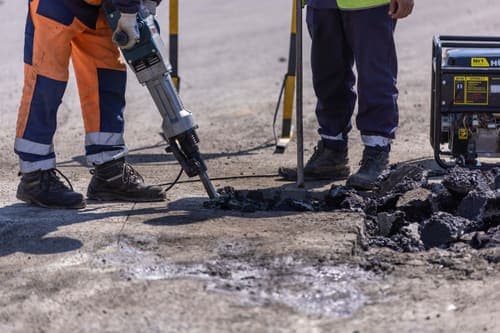
An asphalt patch is the right call when one area has failed and the rest of the drive is still sound. We saw-cut a clean square around the bad spot instead of feathering hot mix out over the old surface, because a feathered edge lifts the first time a delivery truck turns on it.
The dead material comes out down to firm rock, every vertical face gets tack coat, then hot mix goes in two lifts and gets rolled flush with the grade around it so water runs off rather than pooling in the seam. Most single driveway asphalt patches are finished in a day. Size, depth and how close we can park the truck do more to set the cost than anything else.
Patching is the smallest of our asphalt paving services and the same standard as the rest of our Honolulu Asphalt Paving work.
Pothole Repair
Potholes don't start as holes. They start as a crack somebody ignored, water works down through it, the ground underneath goes soft, and a tire pumps the material out one pass at a time until you've got a bowl.
Shoveling cold mix in and stomping it flat is why the same hole shows up again after a good run of rain. We saw a square edge around the failure, dig out the soft material until we're down to something solid, tack the sides so the new mix bonds instead of sitting in there like a cork, then lay hot mix in lifts and roll it flush with the surface around it.
Depth, how saturated the ground is, how many holes there are and whether a roller can reach them are what move an asphalt patch repair quote.
Recycled Asphalt Driveway
A recycled asphalt driveway is built from millings, the ground-up surface we haul off other jobs, spread in lifts and rolled tight rather than poured hot. Give it sun and traffic and it knits together into something close to driveway asphalt, just browner and rougher underfoot. Lay it wrong, in one fat lift with no roller, and you've bought gravel with ambitions: ruts down the wheel tracks after the first real stretch of rain.
Grade decides everything. Water running the length of a drive will push loose millings toward the street, so we crown it and hold the edges against something solid.
Not every asphalt paving co bothers with recycled asphalt paving, but we do, mostly on long country drives where hot mix is more than the job needs. Depth, length, access for the truck and how much old surface comes off first are what shift the cost to pave driveway asphalt this way.
Asphalt Reseal
An asphalt reseal is the thin protective coat we put over a surface that's still sound underneath but has gone gray, dry and chalky on top. We blow it clean, pull the weeds out of the joints, scrub and prime the oil drips, fill the hairline cracks, then lay the coat and cut the edges in by hand. Most residential jobs are a day's work.
It needs a dry window too, because rain on green sealer runs it into the street and you're left with a striped mess.
Sound driveway asphalt gets resealed every three to four years.
What moves the price is square footage, how much crack work it needs first, how tight the access is for our equipment, and whether we can close the area off while it cures. It's the cheapest asphalt maintenance you can buy for what it saves you later.
Asphalt And Sealcoating
Asphalt and sealcoating belong in that order, and plenty of asphalt driveway companies run it backwards. Sealer is a skin, not glue. Squeegeed over an open crack or a soft spot, it sinks in, dries dark, and a few weeks later that same crack is grinning up through the fresh black.
So the asphalt repair happens first: we rout and fill the cracks, saw out anything spongy and replace it, give it time to set, then seal the whole surface edge to edge.
What moves the number on a combined job is the square footage, how much repair has to happen before any sealer goes down, how deep the bad spots run, and whether we can back a truck up to the work or haul everything past a narrow gate. Sun here cooks the binder out of a surface, which is why asphalt maintenance on a schedule costs you less than resurfacing does later.
Asphalt Driveway Maintenance
Asphalt driveway maintenance is the cheap half of what I do, and the half everybody puts off. On a maintenance visit we sweep the sand and leaf litter out of the low spots, cut back the grass creeping in at the edges where the roots lift the mat, fill hairline cracks while they're still hairline, and follow where the water actually leaves the surface. Water is what kills a driveway here.
It slips under through a crack you'd never look twice at, softens what's holding the mat up, and now you're buying asphalt repair instead of asphalt maintenance. Size, how tight the access is for our truck, and how far the surface has already gone are what set the price on regular asphalt paving services. The drives we look in on stay boring. The ones we meet cold usually don't.
What the job involves
Most asphalt repair starts with a saw, not a shovel. We cut a clean square around the failed area, break out everything soft, and haul it off so we can see what the ground under it is actually doing. Then tack coat on every cut face, hot mix in lifts instead of one deep dump, and a roller over it while it's still hot enough to move.
Size, depth, how the truck gets in, and how far things have spread by the time you call are what change the price.
Where cheap asphalt driveway companies lose it is the edge. Feather thin hot mix over the old surface instead of cutting a vertical joint and that seam opens up in the first heavy rains. Water gets under the patch, the ground softens, and you pay for the same square twice.
What it costs
What it costs comes down less to the size of the hole than to what sits underneath it. Surface asphalt repair, where the top inch or two has gone brittle and the stone is working loose, is quick work: saw a clean square, tack the edges, lay hot mix, roll it out. Full depth blacktop repair means digging out soft material and rebuilding from the bottom, which is more labor and more truck time.
Five scattered spots cost more than one big area, because getting set up is most of the job. Tight gates and steep drives mean hand tamping instead of the roller. And we won't lay hot mix into standing water, so a rainy stretch moves the date. Give me a call at (808) 808-9481, tell me the rough dimensions, and I can size it up on the phone.
Pairing pothole repair with asphalt and sealcoating on one visit saves a second setup.
When asphalt repair is the wrong fix
Asphalt repair is the wrong call more often than you would think, and I will say so on site rather than take the work.
If the surface is spiderwebbed corner to corner and gives a little underfoot, patching just moves the failure two feet over. What you want there is Asphalt Resurfacing, or a full tear out and rebuild. Go the other way, and if the mat is solid with a few hairline lines running through it, Crack Filling handles it and blacktop repair is overkill.
No amount of pothole repair fixes a lot whose actual complaint is that nobody can see where to park, that is Parking Lot Striping. Sealer has the same limit: asphalt and sealcoating laid over a base that has given up is paint over rust. And on a driveway trenched, dug and re-patched five times, Driveway Paving from scratch beats one more asphalt reseal.
Why choose us for this
You've got a hole in the drive, you want asphalt repair done once, and you'd like to stop noticing it every time you back out. Not a project to supervise.
We're rarely the low bid on blacktop repair, and the reason shows on the work: we saw the patch square, tack the walls, and roll it in lifts. Skip those and the edge lifts by the second wet season. Size, access, depth and the shape it's got into all pull the price around. A look and a quote cost you nothing, and neither one puts you on the schedule.
Frequently asked questions
Can you fix just the bad section, or does the whole driveway have to come out?
Usually just the section. We saw cut back past the crumbling edge into sound pavement, dig out whatever went soft underneath, and lay hot mix in two lifts. A single pothole repair is finished in a day.
What's the difference between resealing and resurfacing?
An asphalt reseal is a thin protective coat over pavement that's still structurally fine, redone every three to four years. Resurfacing lays new hot mix over the old and is what you want once cracks run wider than about a quarter inch across most of the surface.
How soon can I drive on it?
Foot traffic that afternoon, cars after 24 hours. In our heat, keep a loaded truck off a fresh repair for a week and avoid turning the wheel while parked.
Contact Honolulu Paving Co now
Getting hold of asphalt paving contractors in Honolulu shouldn't take three days of chasing, so somebody is here nine to five on weekdays, and a message left after hours gets a call back.
Ring (808) 808-9481 and tell me what you're looking at: a crack you can drop a coin into, a soft spot that sinks after a wet stretch, or a lot due for an asphalt reseal before the stalls get repainted. We come out, measure, and check how deep the damage goes, because a skin coat over a failed foundation is work you pay for twice. Depth, truck access and how long it's been left all change what the repair takes.
We do asphalt repair, recycled asphalt paving, and full recycled asphalt driveway work, which is more than most asphalt driveway companies around here will touch.