Drivers circling your lot because the stalls have faded to ghosts and nobody's sure where to park.
Parking lot striping in Honolulu is the last two hours of work on a lot and the first thing anybody judges it by. We stripe for churches, medical offices, shopping strips and apartment buildings across the island, and most of the calls start with handicap stalls gone faint enough that people argue over them. What I refuse to do is put fresh paint over a deck still slick with oil drip and red dirt.
Parking lot painting only holds on a clean, dry surface, and skip that and you've paid to watch it flake off in a few weeks. Decent parking lot striping contractors say so before the tape comes out.
Below you'll find what the work actually involves, the layout decisions worth a minute of thought, what moves the number, and the questions owners ask first. Call (808) 808-9481 and we can walk the lot together.
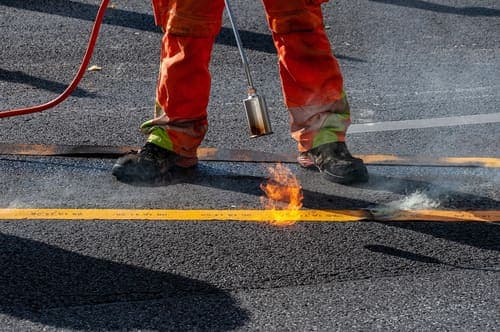
Line Striping
Parking lot striping starts with layout, not paint. We chalk the lot off a measuring wheel, snap the stall lines, and walk them with you before the striper fires once. The machine is an airless parking lot striper running waterborne traffic paint, with glass beads worked in where you want the lines catching headlights after dark.
We blow and scrub the surface first. Paint laid over dust or an old oil spot flakes off in strips within a few months, and that is most of what separates parking lot striping contractors who last from the ones who don't. We also won't put paint down while the asphalt is still damp from a passing shower, because it beads and lifts.
The striper rides in the same truck as the rest of our Honolulu Asphalt Paving work.
Road Striping
Road striping is the same work with a longer run in front of it: centerlines, edge lines, stop bars, arrows and crosswalks on private roads, resort drives and condo loops that the county never touches. The parking lot striper that lays your stalls is the same machine and the same crew out on the access road.
We snap a chalk line on the long curves first, because a wavy centerline is visible from a hundred yards away and stays visible for years. Glass beads go down into the wet paint as we spray, and that is what throws your headlights back at you when rain is sheeting across the pavement at night.
Length of the run moves the price most, then whether we follow the old layout or set a fresh one, and whether the road needs cones and a flagger to keep cars moving while the paint sets.
Parking Lot Restriping
Restriping is for the lot where the layout still works fine and the paint has just gone chalky under the sun. We follow the ghost lines that are already down, so none of your regulars has to relearn where the compact stalls are. Before any paint goes out, we blow the stalls clean and scrub the oil shadows, because fresh traffic paint laid over red dirt and brake dust lifts off in ribbons and you've bought a coat of nothing.
That prep is the part plenty of parking lot striping companies skip to keep the day short.
What moves your number is stall count, whether the layout stays as-is or changes, how much of the lot we can close off at a time, and whether the arrows, fire lane curbs and accessible stalls need repainting along with the rest.
What the job involves
Parking lot striping starts well before any paint comes out. We blow and sweep the surface first, because paint laid over dust, red dirt or an oil stain lets go in sheets and you end up paying for the same lines twice. Then layout: we measure the stalls, snap the lines, and pull the spec for accessible stalls and their access aisles for your site before anything gets painted.
The parking lot striper we run is an airless walk-behind, so the line goes down at even thickness instead of the thin-and-fat wobble a roller leaves. Fire lanes, arrows, stall numbers and crosswalks get stenciled.
Stall count and lot size move the price, along with stencil work, curb painting, and whether the lot can close or we work it in sections. A passing shower stops us cold. Damp asphalt won't hold paint.
What it costs
What it costs on your lot comes down to the stall count, the condition the asphalt is in, and how much of the layout has to be measured out from scratch. A straight parking lot restriping over lines we can still make out moves fast. Laying out bare black pavement, with ADA stalls, arrows, fire lane lettering and curb work, means measuring and chalking before any paint goes down.
Waterborne latex runs cheaper than the thicker material we use on drive aisles that take delivery truck turns. Access changes it too: a lot we can close off in halves midweek is easier than one we have to work around a lunch rush. Give me the stall count and the address when you call (808) 808-9481 and I can put a real figure on it. Most parking lot striping contractors won't quote sight unseen, and neither will I.
When parking lot striping is the wrong fix
Sometimes parking lot striping is the wrong fix, and it is better you hear that before the paint goes down. If the surface is alligatored and you can scuff loose stone off it with your shoe, fresh paint will not hold. It sheets off with the first real rain and takes your stall lines with it. That lot wants Asphalt Resurfacing, or Asphalt Milling first if the grade has crept up against the curb over the years.
Cracks running straight through a stall are the same story. Crack Filling goes down before any line striping, otherwise the paint just draws you a map of every crack you have.
And if the trouble is a spalled walkway or a heaved apron, parking lot painting fixes nothing. That is Concrete Sidewalks and Concrete Driveways work, and restriping around it is money you spend twice.
Why choose us for this
You've got stalls nobody can see anymore, an accessible space that's more suggestion than marking, and you want parking lot striping handled once so you can stop thinking about your lot altogether.
What decides how that goes is the prep, not the paint. Dust and dried salt spray hold a line off the asphalt just enough that it powders away in a few months, so we blow and sweep the whole surface first and let a passing shower dry off before anything gets laid.
And I won't run fresh line striping over a layout that's already three or four coats deep without telling you it should be ground back, because paint stacked on paint lifts in sheets.
My number usually isn't the low one, and the sweeping is most of the reason why. Size, access and how faded the old layout is move it more than anything.
The estimate is free, and walking your lot doesn't sign you up for a thing.
Frequently asked questions
Do you have to seal the lot before parking lot striping?
Not always. But if we're sealing first, that coating cures two full days before any line striping goes down. Paint laid on green sealer lifts in sheets the first time a delivery truck cuts a hard turn across it.
Can you just paint over the old lines?
Yes, when the layout isn't changing and the existing paint isn't flaking. If you're adding stalls or an ADA space, we black out the ghost lines first. Otherwise drivers follow the shadows they can still see and park crooked for a week.
What paint do you use?
Water-based traffic paint on dry pavement, dry to the touch inside an hour. Oil-based wears longer on heavy commercial parking lot painting, though it wants a wider dry window before we spray.
Contact Honolulu Paving Co now
When you're ready to contact us, we're the asphalt paving contractors businesses in Honolulu call once the stalls have gone ghostly and delivery drivers are guessing where the lane went. Ring (808) 808-9481 and tell me three things: roughly how many stalls, whether the lot can be cleared in halves, and if the layout is changing.
Most parking lot restriping goes down in sections so you never lose the whole lot for a day, and paint wants dry pavement, so a wet morning in Kakaako pushes us to the afternoon rather than to next week. Fresh parking lot painting over a new seal coat, or just line striping on a faded fire lane, both start the same way.
Somebody's here weekdays, nine to five, messages get called back, and we're licensed, bonded and insured with the certificate available if you want to see it.