Asphalt takes a beating on Oahu. Afternoon downpours work water in under unsupported edges, salt air and steady UV dry the binder until it greys and ravels, and roots from the hedge next door lift the surface from below. The work here runs from single-family driveways and private lanes to condo lots, church and school parking, and the loading aprons behind commercial buildings, from Hawaii Kai out to Kapolei and up through Central Oahu.
What a job costs depends on square footage, how much failed surface has to come out, whether the base underneath is still sound or needs rebuilding, room for a truck and roller to work, and the compacted thickness of the mat. Two inches holds up fine under cars. Delivery trucks, trailers and rubbish bins want more, or the surface dents and cracks at the wheel paths within a few seasons.
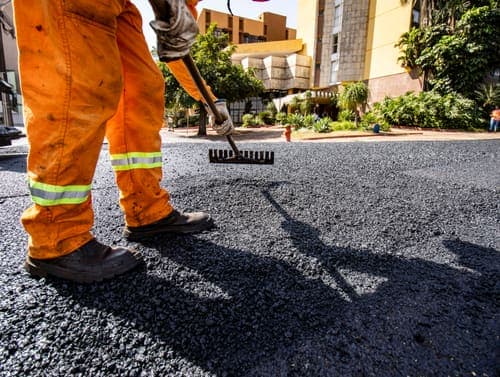
Paving Contractors
Not every crew with a hot box and a roller is set up for the same job. Before you hire, check three things: a current Hawaii contractor's licence, general liability and workers' compensation in force, and finished work nearby you can drive past and look at. We are licensed and will read you the number over the phone. It stays off the page because published licence numbers get pulled from public records and used to spam contractors. We will also tell you who runs your crew, which plant the mix comes from, and how permits and traffic control are handled when the work touches a city street.
Honolulu adds its own wrinkles: salt air, heavy afternoon rain, coral fill under older lots, tight streets in Kaimuki and Manoa. Established asphalt paving contractors here have been trading around fifteen years on average, and the good ones set grades around drainage first, since standing water kills new paving faster than traffic does.
Asphalt Companies
Plenty of asphalt companies on Oahu subcontract the whole job out, so the crew that shows up is not the one that quoted you. Ask us who runs the paver, what equipment we own, and which plant the hot mix comes from. Material that sits in traffic between the plant and Kalihi or Hawaii Kai loses temperature on the way, and mix that arrives cold will not compact properly no matter how many roller passes it gets. A written scope should name base depth, mat thickness after compaction, and where water leaves the surface. Quotes from paving companies that skip those numbers are usually vague for a reason. Insurance and workers' comp should be current, and the warranty terms for raveling or settling in the first year belong in writing.
Paving Companies
Plenty of crews can spread hot mix, but fewer handle the whole scope. The paving contractors worth your time on Oahu can mill and haul away failed pavement, reset the grade so runoff reaches a drain instead of ponding against a garage slab, patch potholes, sealcoat, and stripe stalls when the surface cures. Ask us what the mat measures after compaction rather than before, and what base course goes underneath, because four inches of asphalt over soft, unprepared subgrade will alligator within two rainy seasons no matter how well it was rolled. On commercial paving, permits and phasing matter just as much, since tenants still need somewhere to park while the work moves across the lot. Some asphalt companies sub out striping and drainage, which is normal, so pin the schedule down in writing.
Asphalt Paving
Asphalt paving starts long before the truck arrives. Hot mix comes from the plant and goes down on a stone base that has already been graded and compacted, then gets rolled while the mat is still hot enough for the aggregate to lock together. Around Honolulu the base is usually crushed basalt or coral, shaped so water runs to a defined edge. Standing water, not tyre load, is what tears up pavement in this climate. Two inches of surface course suits most residential work; commercial paving under delivery trucks needs a thicker mat over a deeper base. A single driveway usually goes in within a day, foot traffic that evening, vehicles after two or three.
Corners get cut on compaction and edge support. An under-rolled mat holds up one season, then ravels at the joints and breaks away wherever nothing supports the edge.
Bricks Paving
Bricks paving is the option people choose for entry aprons, courtyards, pool surrounds and walkways where a solid black surface would look heavy. The work is more about the base than the brick: excavate, lay and compact aggregate, screed a bedding course of sand, set the pavers, install a rigid edge restraint, then sweep in polymeric joint sand and compact again. Skip the edge restraint and the outer rows creep sideways within a season; skimp on base compaction and you get dips and rocking bricks that trap water. Expect a small residential area to take two to four days, longer if drainage or a concrete curb is part of it. Brick runs well above asphalt paving per square foot, so many Honolulu properties combine the two, asphalt for the drive, brick for the visible apron.
Asphalt Contractors
A paving job on Oahu takes more than a crew with a roller and a load of hot mix. Asphalt contractors deal with everything around the mat: milling off a failed surface, digging out soft spots down to base, correcting grade so runoff reaches a drain instead of pooling against a building, then striping and ADA stalls once the lot has cured. Drainage and base thickness decide how long the surface lasts, and both get spelled out in writing before the first truck arrives. Ocean humidity and hard tropical downpours punish pavement here, so seams, edges and cold joints deserve more attention than they get on the mainland. Crack sealing, patching and pothole repair are jobs we take on their own, not only as part of larger commercial paving contracts. Most established asphalt companies in this market have been at it around fifteen years.
Paving Co
A full-service paving co does more than lay new surfaces. Most of what we handle around Honolulu is maintenance work that keeps existing asphalt from failing early: sealcoating to slow UV damage and salt-air oxidation, routing and filling cracks before water reaches the base, cutting out alligatored sections and patching them, repainting faded stalls and ADA markings, and correcting the low spots where trade-wind rain ponds instead of draining. We also mill worn surfaces down and overlay them when the base is still sound, which costs far less than a full tear-out.
We work across the island, Kalihi, Kaimuki, Kapolei, Pearl City, Hawaii Kai, for homeowners, HOAs, churches, and property managers. Small repairs are usually a one-day visit; larger paving projects are scheduled around your access and business hours.
Laying Asphalt Driveway
Laying asphalt driveway surfaces starts well below anything you will ever see. We strip topsoil and soft fill, shape the subgrade so water runs off the slab instead of pooling at the garage door, then place and compact a crushed base, usually four to six inches, and thicker where the ground stays saturated after a Kona rain. Hot mix goes down in one or two lifts and gets rolled while it is still at temperature, which is why our asphalt paving crews watch the windward forecast before booking a pour.
Most residential drives are a single day, with edges and apron transitions cut and sealed that same afternoon. Poor compaction shows up months later as alligator cracking and settled low spots. Slope, thickness, site access and how much old material has to be hauled away move the cost most. Give the new surface two to three days before parking on it.
Asphalt
Asphalt is crushed stone bound with liquid bitumen, laid hot and rolled tight before it cools. Island conditions are hard on it: constant UV bakes the binder, salt air goes after coastal lots, and heavy rain finds any weakness in the base. As the binder oxidizes the mat fades toward gray, hairline cracks open, and water works its way down to the gravel. Once the base stays saturated you see alligator cracking and potholes, and patching stops keeping pace.
Good asphalt paving is won underneath, in a graded, compacted base with drainage that moves water off the surface. Driveways are usually laid thinner than a commercial paving job, where truck loads call for a deeper mat over a stronger base. Thickness, base condition and site drainage are what move the price.
Roads Paving
Private roads, resort access lanes and subdivision streets take heavier and faster loads than a driveway, so the build-up changes. We lay a thicker binder course and wearing course over a properly compacted aggregate base, and set the crown and cross slope so water runs to the shoulder instead of sitting in the wheel paths, which matters with our rainfall and the salt air on windward routes. Trench crossings, utility covers and tie-ins to county pavement get their own detailing, since road surfaces almost always start coming apart at those joints.
Pricing on roadway paving follows width and length, the state of the existing base, whether milling comes first, and traffic control if the lane has to stay open. Most residential roads run a few days, phased half width. We take density readings as we compact and keep the results.
Asphalt Paving Contractors
A truckload of hot mix is not the same thing as a paving crew. The asphalt paving contractors you want on your property arrive with their own paver and a roller sized to the space rather than shovels and a plate compactor, and they plan the haul so the mat goes down while the mix is still hot. A long crawl from the plant through Honolulu traffic is often the difference between a tight, sealed surface and one that ravels within two summers.
Ask us who will actually be on site, because some asphalt companies broker the work out and never set foot on the job. Ask us about permits and right-of-way approval if the work touches a city street, and how access stays open for neighbors and tenants while the crew works.
Asphalt Company
Hiring an asphalt company means hiring a crew, a paver, a roller and a delivery plan that gets hot mix from the plant to your property while it is still workable. Island logistics matter more than people expect: a truck held up in traffic arrives cool, and cool mix will not compact, which is where early ravelling and low spots come from. We handle driveways and private lanes, apartment lots, warehouse aprons and commercial paving for retail and industrial sites across Honolulu, plus the work around it, milling out failed pavement, correcting grade so water sheds instead of ponding, and sealing cracks before they widen into potholes. Salt air, trade winds and heavy afternoon rain shorten pavement life here, so asphalt paving contractors who ignore the forecast end up repaving their own work.
Driveway Paving Cost
Most residential driveway paving cost in Honolulu falls between roughly $3,120 and $9,360, with a typical job landing near $5,460. The cheaper end is a resurface at about $4.15 to $6.95 per square foot, where the existing base is still sound and nothing gets dug out or hauled away. A full tear-out and rebuild sits higher, and climbs again with regrading, drainage corrections, or hand work on the narrow, sloped lots common in older neighborhoods. Pavers run around $27 a square foot, several times what asphalt paving costs. Small driveways carry a higher asphalt cost per square foot, since moving a crew and a hot mix load costs much the same at 400 feet as at 1,400. Call us for a figure on your own driveway, priced on compacted thickness rather than surface area alone, because a thin mat over a soft base cracks early. Laying an asphalt driveway is usually one to two days on site.
Asphalt Paving Companies
Not all asphalt paving companies work the same way, and the differences show up two or three years later rather than on the day the crew leaves. Ask whether the base course is being rebuilt or just resurfaced, what compacted thickness you are getting, and whether the mix is coming from a local plant, on O'ahu, haul time matters, because asphalt that cools below working temperature before it is rolled will never bond properly. Ask who pulls the permit for work touching a city right-of-way, and who handles trench restoration if a utility line runs under the drive. Reputable paving companies will put lift thickness, tonnage and compaction in writing. Vague one-line quotes usually mean thin asphalt over an untouched base, which ruts under a delivery truck within a season.
Asphalt Cost Per Square Foot
Square footage is only half the math, because depth drives the rest. When we quote asphalt cost per square foot, the biggest variable is what goes underneath: a straight resurface lays a new mat over a sound base with nothing to haul away, while full depth work means tear out, several inches of compacted aggregate, drainage corrections and a heavier mix. Coastal lots with soft or clay heavy soils need deeper excavation. Every ton of material lands here by barge, and that freight sits inside the price no matter which asphalt paving contractors you use. Tight access that rules out a full size paver costs more, and small jobs carry a mobilisation minimum, so a short residential drive prices higher per foot than a wide commercial paving lot. Compacted thickness is where thin bids hide.
Parking Lot Paving
A parking lot takes more planning than a driveway because the property has to keep running while the work happens. Most commercial paving on Oahu gets phased half a lot at a time so tenants and delivery trucks always have a way in, which stretches a two day job into three or four. Base depth follows the traffic on it: passenger stalls sit fine on a lighter section, while drive aisles, truck routes and dumpster pads need deeper base and a thicker mat, or you get rutting and alligator cracking the first heavy rain season. Grade is just as important, since flat spots hold water and standing water breaks a lot down faster than tires do. Striping, ADA stalls with proper access aisles, wheel stops and signage are quoted as separate lines.
Asphalt Parking Lot
Commercial lots take punishment a driveway never sees: delivery trucks pivoting on the same corner each morning, dumpster wheels grinding one patch, water standing in the low end after a Kona rain. So the base matters more than the surface. Most Honolulu lots get a compacted aggregate base under a surface course that is built up thicker through drive aisles and at the dumpster pad, where the weight concentrates. Grading is set so runoff reaches the inlets, because trapped water softens what is underneath and alligator cracking follows fast.
Size and access move the price most. A tight lot with islands, curbs and parked cars carries a higher asphalt cost per square foot than open ground, since crew and equipment cost the same either way. Commercial paving is normally phased in halves so you keep trading, with striping and ADA stalls laid out after cure.
Commercial Paving
Hotels, shopping centers, warehouses and apartment complexes all need surfaces built for heavier loads than a home driveway sees. Delivery lanes, dumpster pads and bus stops take punishment that a thin mat will not survive, so commercial paving usually means a deeper base and a thicker asphalt section in the truck routes, with a lighter section in the stalls where only cars park. Good asphalt paving contractors phase the work so half your lot stays open and pour at night when a business cannot close. Price is quoted per square foot and moves with thickness, subgrade repair, night crews, traffic control and how much cutting around utilities and islands is involved. Most single-phase commercial jobs on Oahu run a few days from mill to stripe, with traffic held off fresh asphalt for at least a day.
What the job involves
Every job starts with removal. We break out the failed asphalt, old slab or soft soil and excavate somewhere around 8 to 12 inches, depending on whether the surface carries family cars or loaded delivery trucks. The base is where the money goes. We shape it for drainage, bring in crushed aggregate and compact in lifts until the roller stops moving material underneath it. Skip that step and the surface cups and cracks after a rainy year or two, which is the failure behind most of the calls we get to redo another crew's work. Hot mix goes down at temperature, gets rolled while it stays workable and is hand tamped at the edges. Thickness, access and how much base has to be rebuilt are what move driveway paving cost. A residential drive is usually one to two days; commercial paving is phased so the lot stays partly open.
What it costs
Driveway paving cost on Oahu comes down to a handful of things, and none of them are mysterious. A short, level drive sitting on sound aggregate that only needs a two inch lift is the least expensive work we do. The price climbs when the old surface has to be broken out and hauled away, when the rock base has to be rebuilt, and when a long or sloped approach needs three inches of compacted asphalt so it carries a truck or a boat trailer without rutting. Access matters too, since a tight lane means smaller equipment and more hand work. Brick paving sits well above asphalt per square foot. Commercial paving adds striping, ADA stalls and often night phasing so the lot stays open by day. Skimp on mat thickness and it cracks within a season.
Why choose us for this
You have a driveway crumbling at the edges or a lot that potholes after every heavy rain, and what you actually want is to deal with it once and not think about it again for years.
No price that grows on the invoice: what we measure at the walkthrough is what we bill, unless you ask us to add work.
No half-finished job: we do not start your slab and then pull the crew onto somebody else's blacktop across town.
No pressure to sign today: the quote stands whether you call back tomorrow or in three weeks.
No mess left behind: broken asphalt, spoil and equipment go out with us.
We are not the cheapest asphalt paving in Honolulu you will be quoted. A thin base and light compaction is usually how the low number gets there, and it shows within two wet seasons. Established companies here average about fifteen years trading, and that is the bar for Honolulu Asphalt Paving work. The estimate costs nothing and commits you to nothing.
Frequently asked questions
How much does a 20x20 asphalt driveway cost?
We price by the square foot once we have seen the base. A Honolulu Asphalt Paving quote turns on how much old blacktop has to be broken out, whether the subgrade takes compaction, and how tight the access is for the paver and roller. Call us with your dimensions and we will give you a real number.
How long does asphalt paving in Honolulu last?
Fifteen to twenty years on a driveway built over a properly compacted base, less where salt air and heavy trade wind rain sit on an unsealed surface. Sealing every three to four years is what stretches it.
Can you pave over what is already there?
Often, yes. A two inch overlay bonds well to old asphalt that is cracked but stable. Alligator cracking means the base has failed, and an overlay will mirror it within a season.
How do we get started?
Call us and we will measure and quote.